Section 04
Bulk & General Cargo
Liquid bulks, dry bulks, breakbulk, and roll-on/roll-off operations.
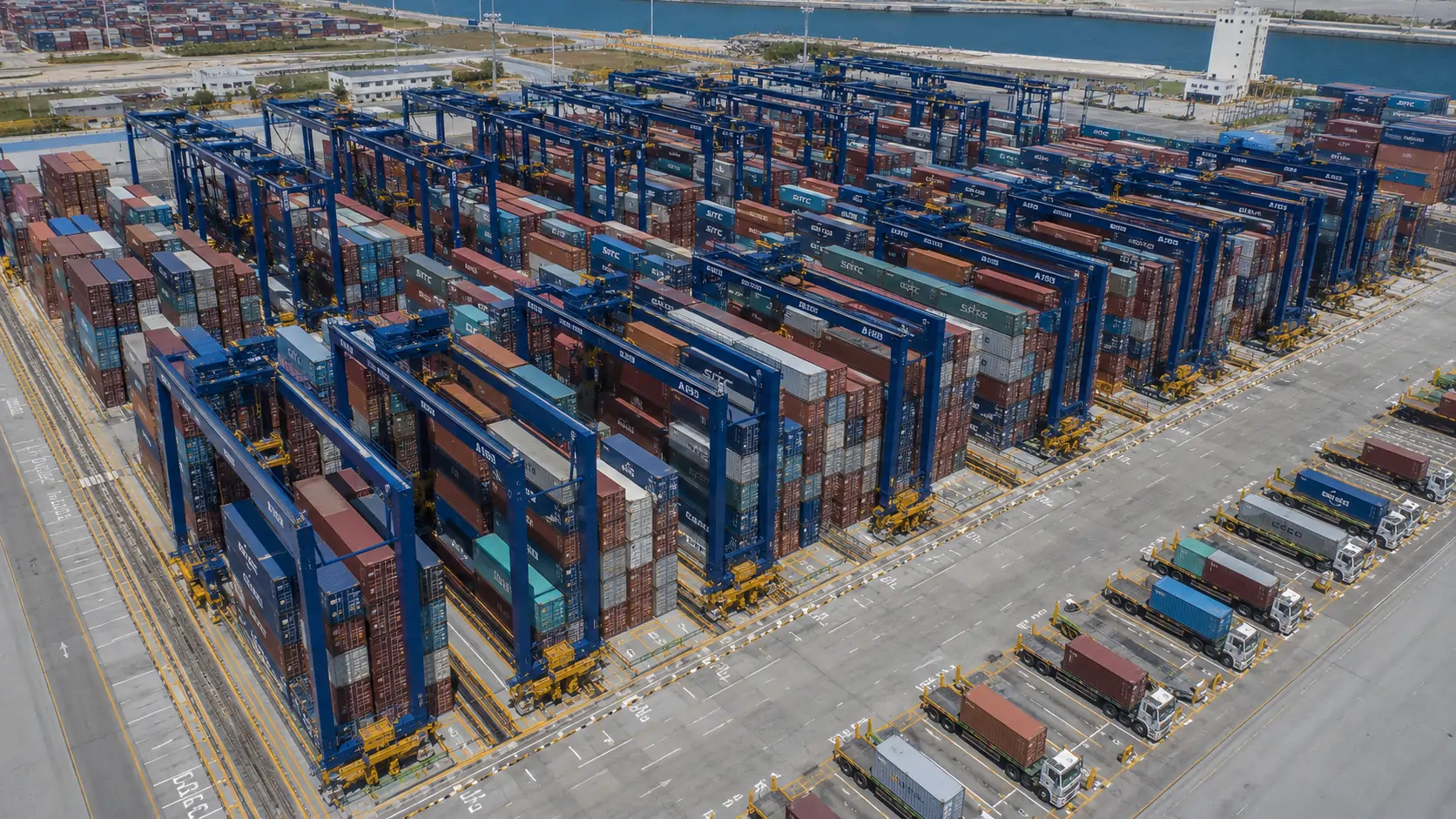
While the Port of Algeciras is principally identified with containerised transshipment, the Algeciras bulk cargo and general cargo operations of the complex account for a substantial share of total tonnage. Liquid bulk movements — predominantly crude oil and refined petroleum products — dominate the non-container portion of the port's annual throughput. Dry bulk, breakbulk, project cargo, and Roll-on/Roll-off (RoRo) operations complete the cargo profile.
Liquid bulk operations
The Cepsa refinery, located at San Roque on the western shore of the bay, is the principal liquid bulk customer of the port complex. The refinery's nameplate capacity at the time of publication was approximately 240,000 barrels per day (bpd), making it one of the larger refining installations in southern Europe. Crude oil arrives at the refinery's dedicated jetty by way of VLCC and suezmax tankers from sources including West Africa (Nigeria, Angola, Equatorial Guinea), the Persian Gulf, and Caspian export points.
Refined product movements — gasoline, gasoil, jet fuel, and fuel oil — depart Cepsa for distribution across the Iberian Peninsula and for export to other European markets, the Atlantic basin, and North African customers. The Cepsa jetty operates four berths capable of accommodating tankers from coaster size up to VLCC.
The EVOS Algeciras SAU fuel storage installation at Isla Verde Exterior provides independent third-party storage capacity for petroleum products. EVOS operations support the port's bunker fuel supply chain and serve as a regional distribution point for refined products independent of the Cepsa refining operation.
Dry bulk operations
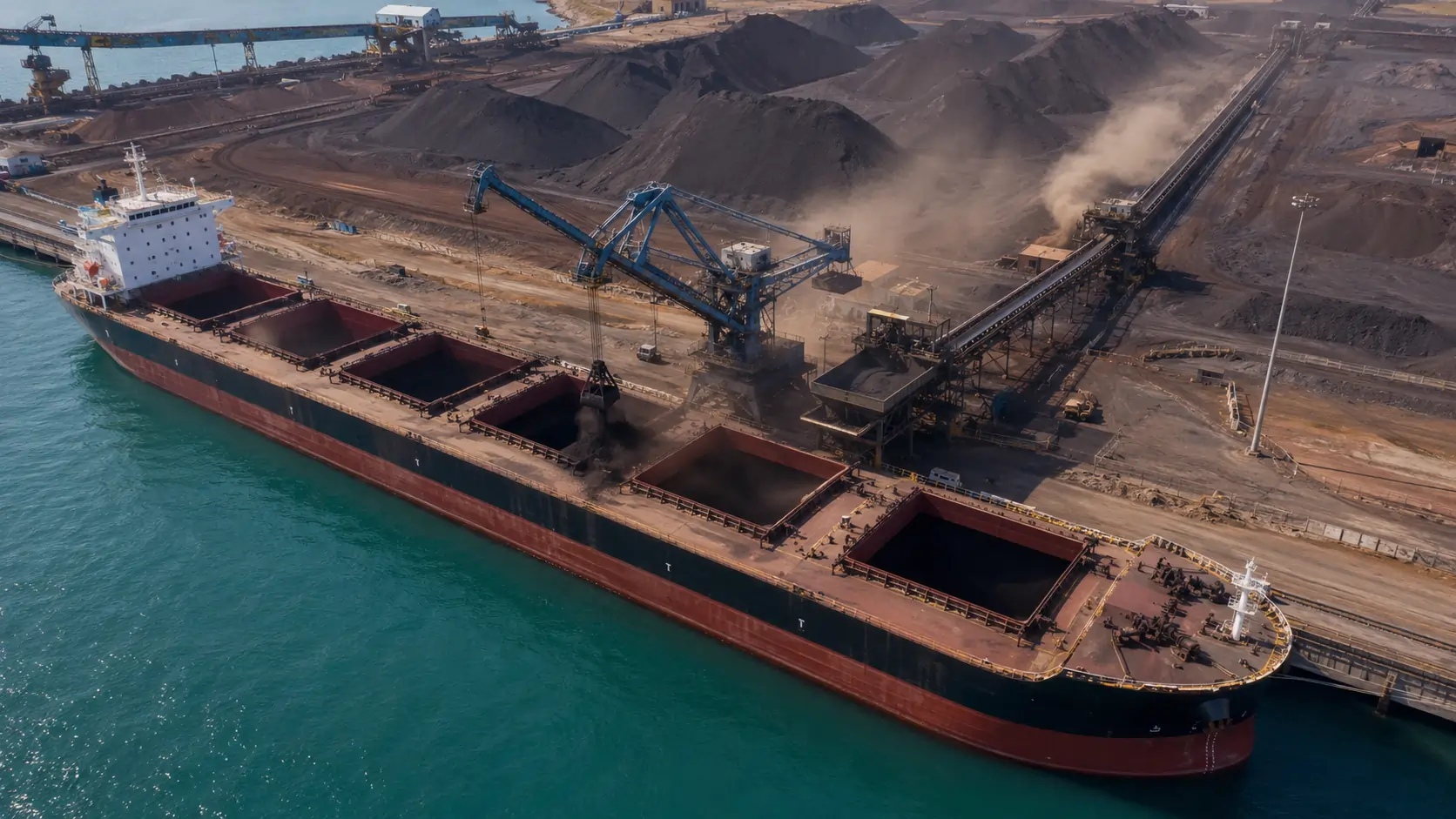
Algeciras bulk cargo handling in the dry segment is concentrated at the Campamento and Los Barrios installations. The principal commodities are coal, iron ore, and metallurgical inputs, with the Endesa thermal generating station and the Acerinox stainless steel works accounting for the great majority of the volume.
The Endesa Los Barrios power station, a 568 MW coal-fired installation, received bulk coal cargoes throughout the 2010 reporting period from suppliers in Colombia, South Africa, Russia, and Indonesia. Bulk coal handling is conducted at a dedicated berth with grab crane discharge equipment and an onshore conveyor system feeding the power station's coal stockyard.
The Acerinox steel works at Los Barrios — one of the largest stainless steel production facilities in Europe — receives iron ore, nickel, ferrochrome, and other metallurgical inputs by sea. Finished stainless steel coil and sheet products depart by the same route for European and global markets.
Editorial Note · 2026
The Endesa Los Barrios coal-fired power station ceased generating operations in 2021 as part of the Spanish national programme of coal capacity retirement under the European Union's Just Transition framework. Coal import movements through Algeciras have correspondingly diminished. The site is at the time of writing under redevelopment for renewable energy generation.
Roll-on / Roll-off (RoRo) operations
Roll-on / Roll-off vessels — designed for the embarkation of wheeled freight under its own power, by means of stern or side ramps — are a substantial presence in the Algeciras traffic mix, particularly in connection with the ferry services to Tangier and Ceuta covered separately in Section 6. RoRo cargo vessels distinct from passenger ferries also call at the port, principally carrying new automobiles, agricultural machinery, and project cargo with onward destinations in Africa and the western Mediterranean.
The principal RoRo terminal facilities are located at the Galera basin in the historic port and at the ferry terminals serving Tangier and Ceuta. Combined RoRo throughput in 2010 — counting accompanied trailers, unaccompanied trailers, and new vehicles — exceeded 350,000 units, with the substantial majority accounted for by the Strait crossings.
Breakbulk and general cargo
Breakbulk cargo — including iron and steel products, paper and forestry products, project cargo, and oversized industrial components — accounts for a modest but stable share of the port's general cargo throughput. The flexibility of the Galera basin and the adjacent quays accommodates the irregular vessel calls and bespoke handling requirements characteristic of breakbulk operations.
Project cargo movements during 2010 included components for wind energy installations in southern Spain, refinery equipment for upgrade works at Cepsa, and oversized steel structures for the construction industry. Heavy lift capacity at the port permits handling of single pieces up to approximately 300 tonnes by ship's gear or by shore-based mobile cranes brought in for specific projects.
Fishing port operations
The Pesquero basin at the historic Algeciras port supports a modest commercial fishing fleet operating in the Strait of Gibraltar and the Alborán Sea (the westernmost basin of the Mediterranean). The fleet's principal catch comprises tuna species (bluefin, albacore, skipjack), swordfish, sardine, and anchovy. Catches are landed at the Pesquero quay and processed at associated cold storage and grading facilities ashore. The fishing operation, while of declining commercial scale relative to the cargo functions of the port, remains an important employer in the local Algeciras municipality.