Section 03
Container Terminals
APM Terminals Algeciras and TTI Algeciras — capacity, equipment, and customer base.
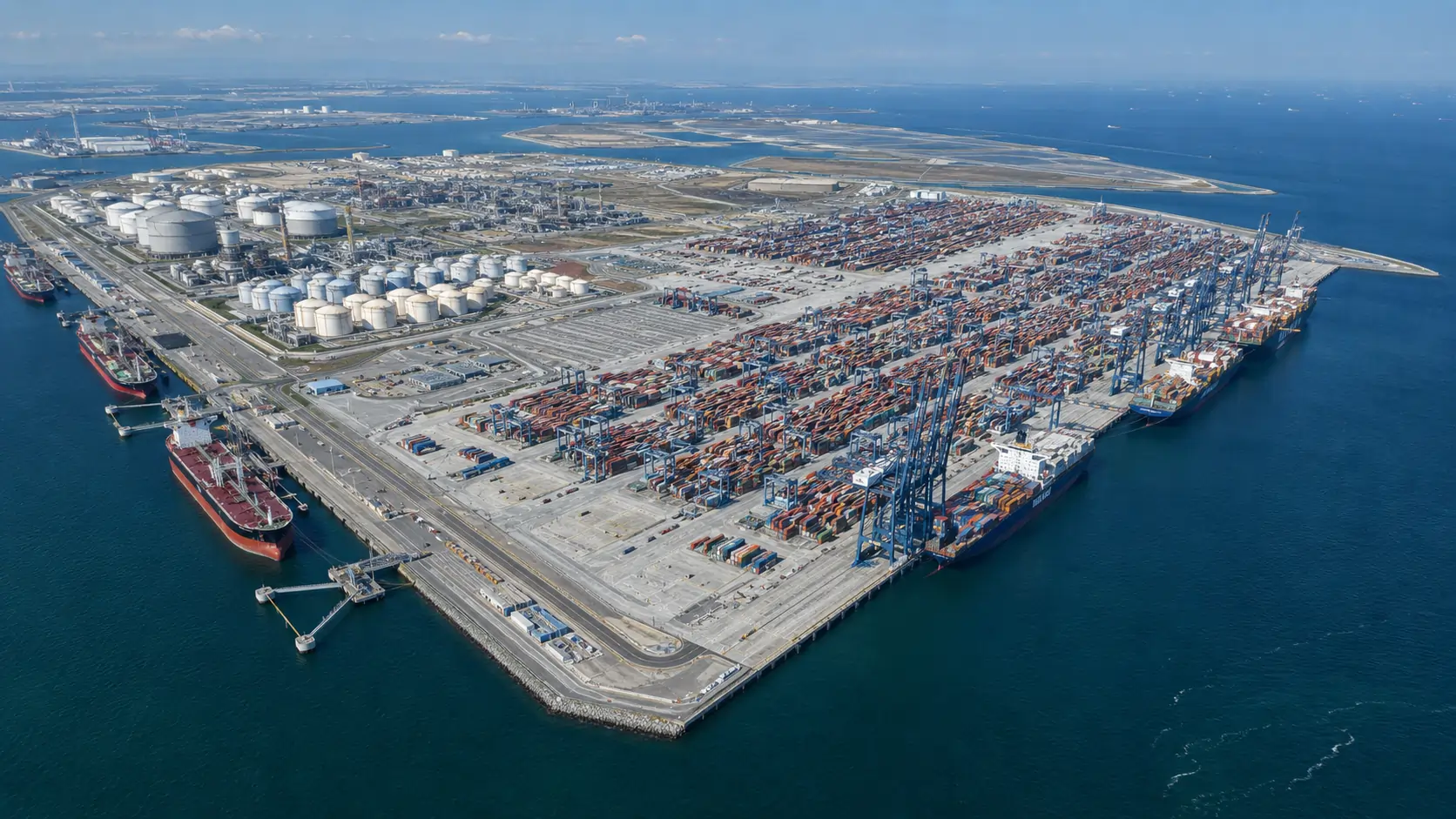
Two container terminals account for substantially all of the containerised cargo handled at the Port of Algeciras. APM Terminals Algeciras, operated by the terminal arm of the A.P. Moller-Maersk Group, handles the principal share of Maersk Line and 2M Alliance volumes. TTI Algeciras, operated under Hyundai Merchant Marine ownership at the time of publication, serves a different group of customers and accommodates a more recent fleet of ultra-large container vessels at its deeper-draft berths. Together, the Algeciras container terminals handled 2.81 million TEU during 2010.
APM Terminals Algeciras
APM Terminals Algeciras occupies the Juan Carlos I Quay at the historic Algeciras port. The terminal footprint extends across approximately 67 hectares of yard and operational space; quay length is in excess of 2,000 metres, configured to accommodate up to three ultra-large container vessels simultaneously.
| Parameter | Value |
|---|---|
| Site area | 67 ha |
| Quay length | 2,100 m |
| Alongside depth | 16 – 17 m |
| Ship-to-shore cranes | 19 |
| Rubber-tyred gantry cranes | 59 |
| Annual capacity (rated) | 3.5 M TEU |
| Reefer plug positions | 1,200 |
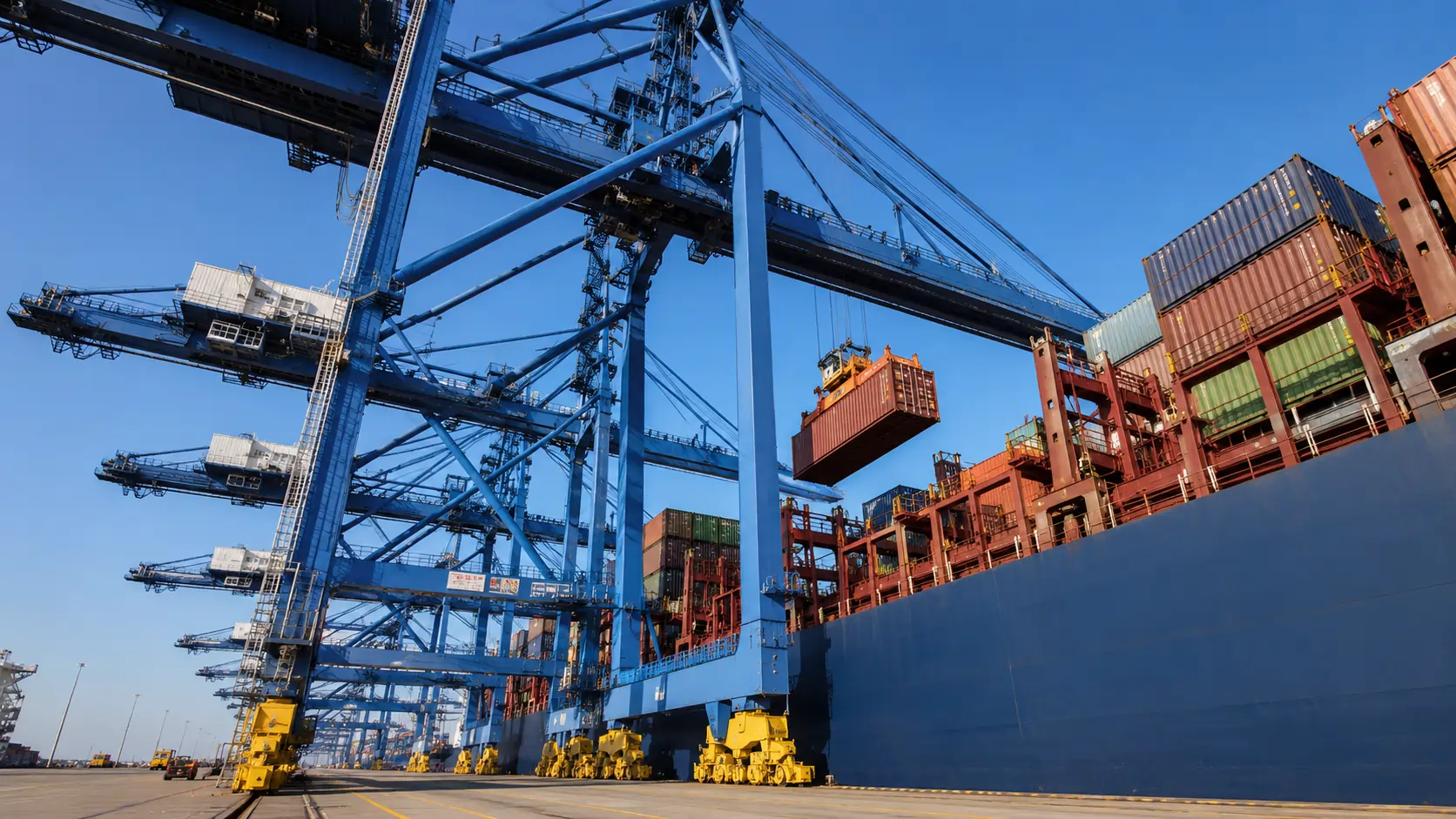
The crane complement at APM Algeciras combines super-post-Panamax ship-to-shore (STS) gantry cranes — capable of working containers stowed 23 across on the largest container vessels — with a yard fleet of rubber-tyred gantry cranes (RTGs) configured to stack containers six high and seven wide. The yard operation is conventional rather than automated, with terminal tractor drivers and RTG operators present at all working positions.
Connecting infrastructure includes a dedicated container rail terminal with three working tracks, served by daily block trains to Madrid (Coslada inland customs facility) and to the Zaragoza-Tarazona rail corridor. Approximately 18% of containers discharged at APM Algeciras during 2010 departed the terminal by rail; the balance moved by road.
TTI Algeciras semi-automated terminal
TTI Algeciras — Total Terminal International Algeciras — is the more recent of the two Algeciras container terminals, having commenced operations in 2010 on the Isla Verde Exterior reclaimed site. The terminal was designed from inception as a semi-automated facility, with yard operations conducted by automated stacking cranes (ASCs) operating without direct human intervention in the stacking area.
| Parameter | Value |
|---|---|
| Site area | 30 ha (Phase 1) |
| Quay length | 1,200 m |
| Alongside depth | 18.5 m |
| Ship-to-shore cranes | 8 |
| Automated stacking cranes | 32 |
| Annual capacity (rated) | 1.8 M TEU |
| Reefer plug positions | 600 |
The principal commercial significance of TTI Algeciras lies in its ability to accommodate container vessels of the largest size class — at 18.5 metres of alongside depth, the terminal can receive ultra-large container vessels (ULCVs) of more than 18,000 TEU capacity at any state of the tide. The semi-automated yard offers higher throughput density per hectare than conventional terminals and reduced labour intensity per container moved.
Ownership of TTI Algeciras at the time of publication is divided between Hyundai Merchant Marine (HMM) and Total Terminal International, the terminal operating arm of Hanjin Shipping. Together with the equipment maintenance contracts and labour arrangements specific to the semi-automated yard, the terminal represents a distinct operational model within the Algeciras port complex.
Editorial Note · 2026
The ownership of TTI Algeciras has changed substantially since the 2011 reporting period. Following the collapse of Hanjin Shipping in 2016, Hyundai Merchant Marine consolidated control of the terminal, and ownership has subsequently been restructured. Current ownership and operating arrangements should be confirmed via APBA or TTI Algeciras directly.
Combined capacity and utilisation
The combined rated capacity of the two Algeciras container terminals as configured in 2010 was approximately 5.3 million TEU annually. Actual throughput in 2010 stood at approximately 2.81 million TEU, representing a utilisation rate of approximately 53% against rated capacity. The spare capacity at both terminals was, at the time of publication, a stated strategic asset of the port — permitting the absorption of additional volumes without immediate infrastructure investment.
Combined fleet of ship-to-shore cranes across both terminals was 27 units. Combined yard equipment fleet (RTGs at APM, ASCs at TTI) numbered 91 cranes. Container stacking capacity across both terminals was rated at approximately 230,000 TEU ground slots.
Customer base and shipping line allocations
APM Terminals Algeciras is configured as a dedicated terminal for the Maersk Line and 2M Alliance services, although third-party shipping line calls are accommodated where capacity permits. The 2M Alliance, between Maersk and Mediterranean Shipping Company (MSC), routes the great majority of its Asia–Europe and trans-Atlantic services through Algeciras for transshipment to feeder operations.
TTI Algeciras at the time of publication served principally the THE Alliance precursor consortia — including Hyundai Merchant Marine's own services and a portion of the Asian container line volumes calling at Algeciras. The terminal's customer base has continued to evolve in line with alliance restructurings since 2011.
Feeder service operations from both terminals connect Algeciras to the principal Mediterranean transshipment markets: Italian, Greek, Turkish, Egyptian, and Levantine ports; the western Mediterranean (Spanish, French, and North African coastal ports); and West African destinations from Casablanca southward to Lagos and beyond.