Section 06
Ferry Services
Strait crossings to Tangier and Ceuta — operators, vessel classes, and traffic volumes.
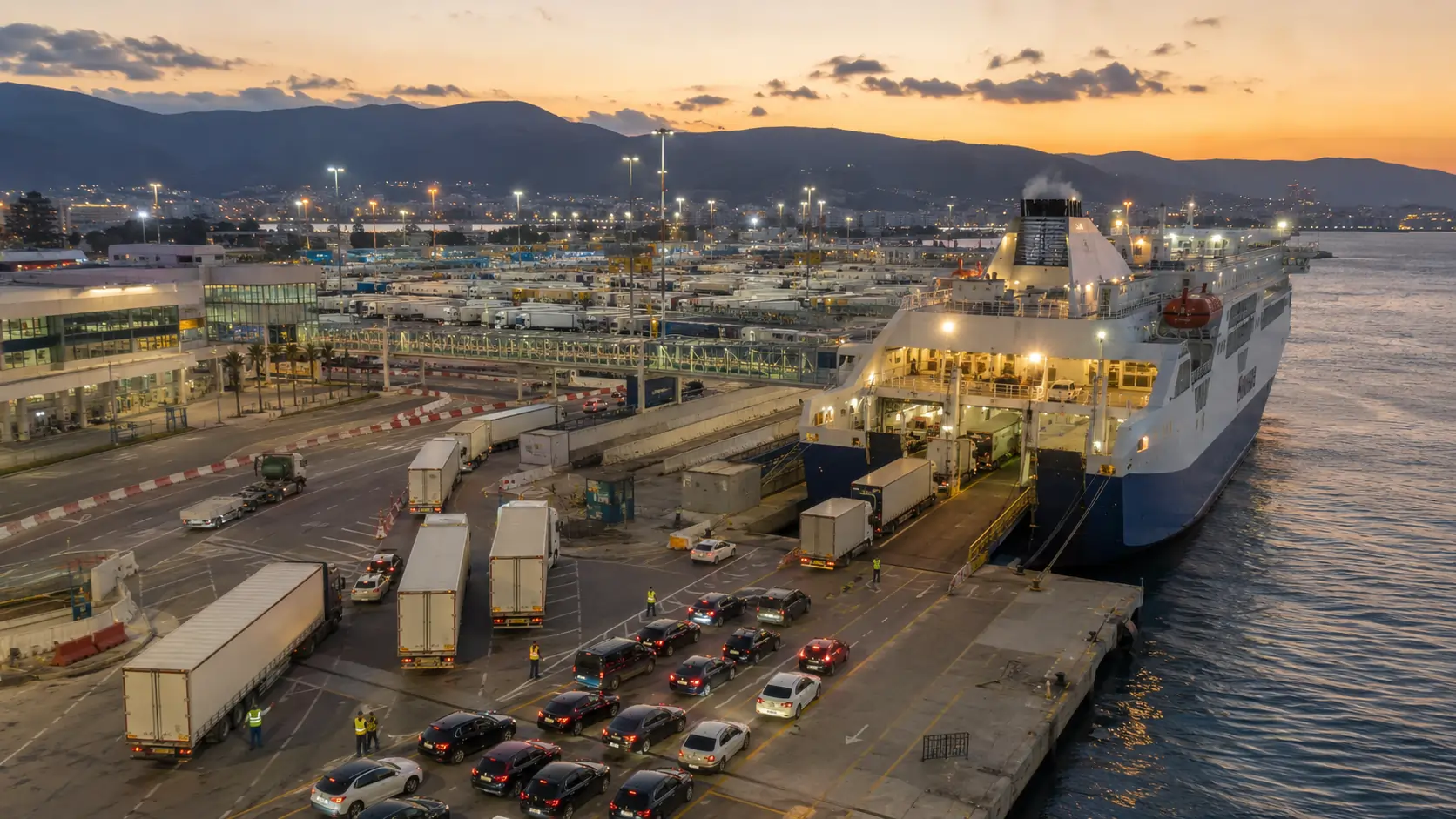
The Port of Algeciras is the principal gateway for surface passenger and vehicle traffic between continental Europe and North Africa. Two Algeciras ferry routes — Algeciras to Tangier (Morocco) and Algeciras to Ceuta (Spanish enclave on the North African coast) — account for the substantial majority of Strait of Gibraltar passenger movements. Combined annual passenger volumes through Algeciras and the associated routes exceeded six million in 2010, with vehicle volumes approaching 1.5 million units.
The Strait crossings in context
The narrow geography of the Strait of Gibraltar — fourteen kilometres at its tightest point, fewer than twenty kilometres at the conventional ferry crossing line — makes the Strait one of the busiest international ferry corridors in the world. Crossing time on the principal fast-ferry services is between thirty-five and ninety minutes depending on route and vessel class. The combination of short crossing distance, dense commercial activity at both ends, and substantial diaspora populations on both sides of the Strait sustains high traffic volumes throughout the year.
The Operation Paso del Estrecho (OPE) — a coordinated annual operation conducted between the Spanish and Moroccan authorities — manages the peak summer migration flow as North African workers and families based across Europe return to Morocco and Algeria for holidays and family visits. The OPE typically runs from mid-June to mid-September; during peak weeks in late July and early August, daily ferry departures from Algeciras alone can exceed sixty sailings.
Algeciras — Tangier route
The Algeciras–Tangier corridor is the most heavily trafficked of the Strait crossings, in both passenger and freight terms. Two destinations on the Moroccan side exist under the "Tangier" designation: the historic Tangier Ville port in the city centre, and the modern Tangier Med complex some 40 kilometres east of Tangier city. By 2010 the great majority of commercial ferry traffic on the route was migrating to Tangier Med, which offers larger berthing capacity, modern passenger facilities, and direct connection to the Moroccan motorway network.
| Operator | Vessel type | Capacity |
|---|---|---|
| Balearia | Fast ferry / RoPax | Pax 1,000+ · Veh 250+ |
| FRS Iberia | Fast craft | Pax 800+ · Veh 200+ |
| Inter Shipping | RoPax | Pax 1,200+ · Veh 300+ |
| Trasmediterranea | Conventional ferry | Pax 1,500+ · Veh 400+ |
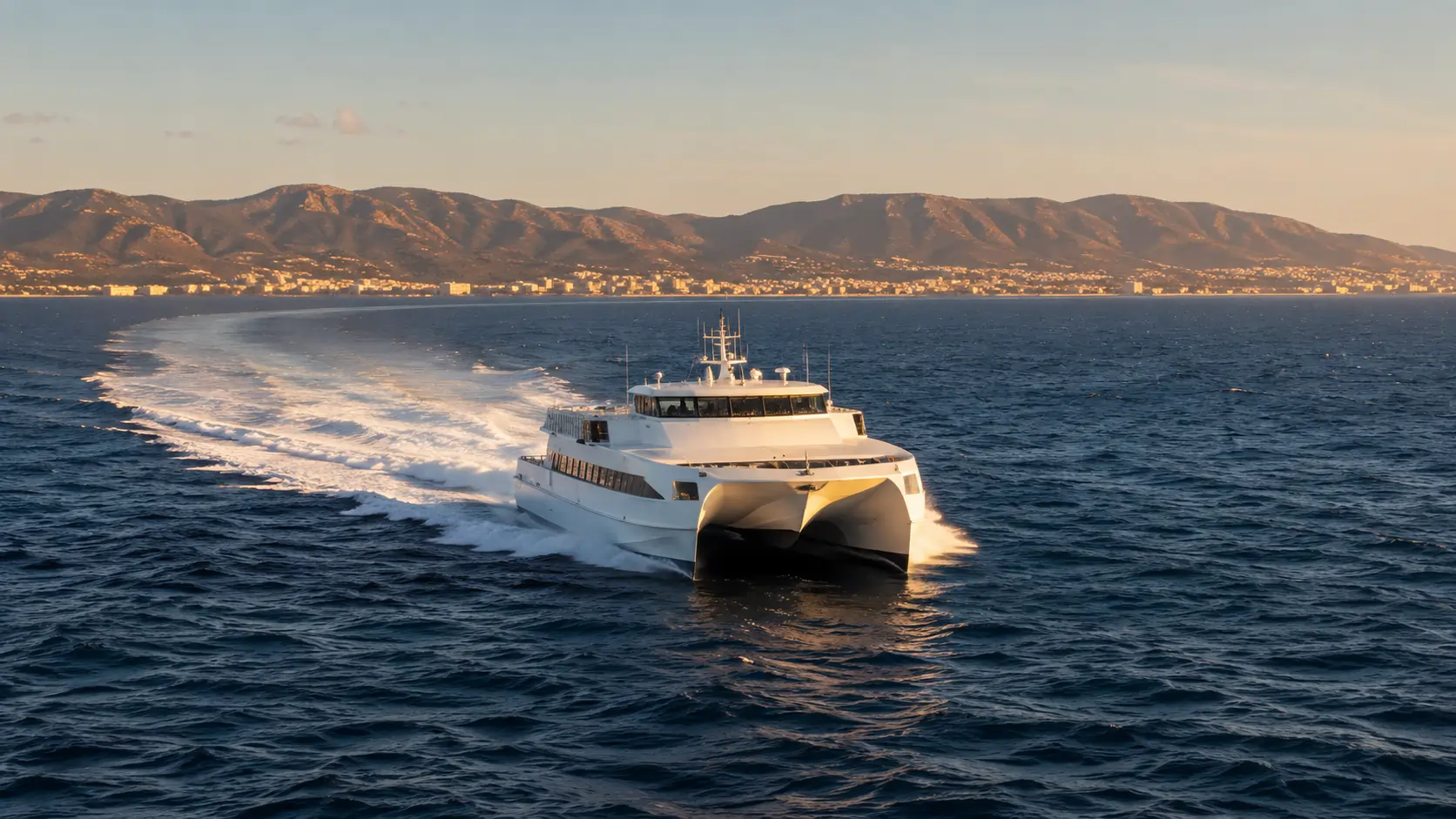
Crossing times on the Algeciras–Tangier route vary by vessel class: fast craft operate the route in approximately one hour, while conventional RoPax vessels (combined passenger and freight) require ninety minutes. Sailing frequency in 2010 averaged thirty departures per day during the high season and ten to fifteen daily during the low season, distributed across the four principal operators.
Algeciras — Ceuta route
The Spanish enclave of Ceuta — a small territory of approximately twenty square kilometres on the North African coast east of Tangier — is administratively part of Spain and connected to the Iberian Peninsula principally by the Algeciras ferry service. Daily ferry frequencies on the Algeciras–Ceuta route number between twenty and thirty year-round, with crossing times of approximately one hour.
The Ceuta route carries a different traffic profile from the Tangier route: a higher share of Spanish national passengers (residents of and visitors to Ceuta), a lower share of trans-Mediterranean migrant traffic, and a substantial volume of supply traffic for the enclave's commerce and military installations. The principal operators on the Algeciras–Ceuta route are Balearia, FRS Iberia, and Trasmediterranea.
Ferry operators on the Strait
Balearia
Balearia, a Spanish ferry operator headquartered in Dénia, operates a substantial fleet across the Spanish ferry market, with the Algeciras–Tangier and Algeciras–Ceuta routes complementing its principal mainland-to-Balearic Islands services. Balearia's Strait services were progressively upgraded during the 2000s through introduction of fast catamaran craft and newer RoPax tonnage.
FRS Iberia (Förde Reederei Seetouristik)
FRS is a German shipping group with an Iberian operating subsidiary. The company entered the Strait market in 2000 and has since established a substantial presence on both the Algeciras and Tarifa crossings to Morocco. FRS operates a fleet of fast catamaran craft optimised for the short crossing distances of the Strait corridor.
Inter Shipping
A Moroccan-flagged operator specialising in the Tangier crossings, Inter Shipping joined the route in the late 2000s as part of the broader Moroccan investment in maritime transport infrastructure surrounding the development of Tangier Med.
Trasmediterranea
Trasmediterranea — Acciona Trasmediterranea at the time of publication — is the historic Spanish national ferry operator, originally constituted as a state-owned enterprise and subsequently privatised. Trasmediterranea maintains conventional RoPax services on the Strait crossings alongside its principal mainland-to-Canary Islands and mainland-to-Balearics routes.
Editorial Note · 2026
The ferry operator landscape on the Strait has evolved since 2011. Acciona Trasmediterranea was acquired by Naviera Armas in 2017, with subsequent corporate restructuring leading to its operation under the Armas Trasmediterranea brand and, more recently, divestment to Grimaldi Group affiliates. Current operator details should be verified directly with Puertos del Estado or the Autoridad Portuaria Bahía de Algeciras.
Ferry terminal infrastructure
The Algeciras ferry terminal complex — located at the historic port adjacent to the Galera basin — comprises four passenger boarding bridges, dedicated trailer marshalling yards capable of accommodating peak-season RoRo throughput, immigration and customs processing facilities, and a modern passenger terminal building offering ticketing, baggage handling, retail, and waiting area services. The terminal underwent substantial renovation in the period 2005–2008 in anticipation of growth in Strait passenger volumes and to accommodate the larger vessels entering service on the route during the late 2000s.